
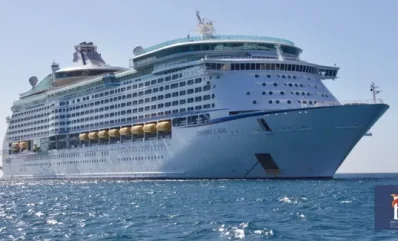
Divorced parents often have a whole new set of rules to learn about traveling with their own children. While taking a weekend trip up to a cabin or theme park typically poses no issue, international travel and cruises can be a cause for concern. This is because many cruise ships travel out more than two hundred miles from shore and are thus in international waters.
Cruises from Virginia to Bahamas or Puerto Rico
There are cruises that depart seasonally from Virginia. These ships typically embark from Norfolk. The usual trip course is to the Bahamas, which does require a passport. A visa is not required for trips to the Bahamas that are shorter than 90 days. What some parents do not realize is that because Puerto Rico and the islands of Vieques and Culebra are U.S. territories, a passport is not required. The same is true of the U.S. Virgin Islands, no passport is required. This means a parent could think that because these areas are technically a part of the U.S. no international travel has happened and permission from the other parent is not required.
Parents with sole custody
It is true that a parent who has sole custody of their child or children does not need permission from the other parent to travel domestically or abroad. Parents with sole custody will have to provide their court-ordered custody arrangement to get the child’s passport. Each custody arrangement is unique however, so ensure that you understand what your agreement says.
Parents with joint custody
If you have joint custody and your child is under 16 then both parents will need to grant permission and the child will need a passport. Again, child custody arrangements can vary from one family to another, so be sure to review your agreement before taking a trip.
How to Get Consent From an Absent or Uncooperative Co-Parent
If your child needs a passport and the other parent cannot appear in person at the passport acceptance facility, the absent parent must complete Form DS-3053, “Statement of Consent: Issuance of a U.S. Passport to a Minor Under Age 16.” The form must be completed in black ink, signed only in front of a notary public (or, under the Department of State’s 2024 rule change, before a passport specialist at a public passport agency/center), and submitted with a photocopy of the absent parent’s photo ID. A notarized DS-3053 is valid for 90 days.
If the other parent cannot be located or will not cooperate at all, you may be able to submit Form DS-5525, “Statement of Exigent/Special Family Circumstances,” in place of DS-3053. This does not guarantee approval — the State Department evaluates these requests case by case — so it’s worth speaking with a family law attorney before your trip if you anticipate this issue.
What Happens If You Travel Without Proper Consent?
Traveling without the required consent can create real problems beyond a delayed boarding. Cruise lines and CBP can deny boarding outright if documentation is incomplete. If your custody order contains a travel-notice or consent provision and you disregard it, the other parent can ask the court to hold you in contempt. And because the United States is a signatory to the Hague Convention on the Civil Aspects of International Child Abduction, taking a child across an international border without the other parent’s consent — even on a cruise — can expose you to allegations of international parental child abduction, which carries both civil and potential criminal consequences.
Does My Virginia Custody Order Require Travel Notice?
Virginia Code § 20-124.5 requires custody and visitation orders to include a 30-day advance written notice requirement, but that provision addresses relocation — a change of residence — not a one- or two-week vacation. A cruise generally does not trigger that statute on its own. That said, many Virginia custody and visitation orders include their own separate travel-consent clauses requiring advance notice, an itinerary, or emergency contact information for any trip taken with the child, domestic or international. Review the specific language of your order before booking, since violating an explicit travel provision — even one unrelated to relocation — can still be treated as a violation of the court’s order.
Documents to Bring for Your Cruise
- A certified copy of your custody order (sole-custody parents) or the other parent’s notarized consent letter (joint-custody parents)
- Your child’s valid passport, if the itinerary requires one
- A notarized DS-3053 (or DS-5525, if applicable) if only one parent is traveling and a passport is being obtained or renewed
- A government-issued photo ID for the absent parent (photocopy)
- Contact information for the non-traveling parent, in case the cruise line or CBP needs to verify consent
What Customs and Border Protection (CBP) recommends
If both parents are not traveling with your child then it is strongly advised by CBP that you get a note from the other parent saying something akin to: “I acknowledge that (person) is traveling out of the country with my child. I have given my permission to (person) do to this.” This note is helpful for authorities to prevent child abductions and to identify illegal activity such as sex trafficking. If grandparents, aunts or uncles or other relatives are traveling with the child, be sure they have all of the required forms given the age of your child.
Frequently Asked Questions
Do I Need the Other Parent’s Permission for a Domestic Cruise?
If you have sole legal custody, no — you generally do not need the other parent’s permission for a domestic cruise or trip within the United States. If custody is shared, check your custody order, since many include their own travel-notice requirements even for domestic trips.
Can I Take My Child on a Cruise to the Bahamas Without the Other Parent’s Consent?
A cruise to the Bahamas requires a passport, and passports for children under 16 generally require both parents’ consent unless one parent has sole legal custody. Without consent from a co-parent who shares custody, you may not be able to obtain the passport or board the ship.
Does a Cruise Count as International Travel If It Doesn’t Require a Passport?
Yes, in practical terms. Even though Puerto Rico, the U.S. Virgin Islands, and closed-loop cruises to the Bahamas may not require a passport, cruise lines and CBP still treat these as trips outside the child’s home port and may request written consent from a non-traveling parent, particularly if custody is shared.
What Is Form DS-3053 and When Do I Need It?
Form DS-3053 is the notarized statement of consent required when only one parent can appear in person for a child’s passport application. It must be signed before a notary, dated within 90 days of the passport appointment, and submitted with a photocopy of the absent parent’s photo ID.
What Happens If the Other Parent Refuses to Give Consent?
If the other parent refuses or cannot be located, you may be able to file Form DS-5525 to explain the circumstances, though approval isn’t guaranteed. A family law attorney can also help you petition the court for permission to travel if consent is being unreasonably withheld.
Can My New Spouse or a Grandparent Take My Child on a Cruise?
Yes, but the same consent rules apply. CBP recommends that any adult traveling with a child who isn’t their legal parent carry a signed note from both custodial parents (or the custodial parent, if one has sole custody) authorizing the trip, along with proof of the relationship to the child.
What Should I Do If I’m Worried the Other Parent Won’t Return Our Child?
If you have specific, credible concerns about international abduction, don’t wait until departure day. Speak with a Virginia family law attorney about seeking a court order restricting or conditioning travel before the trip is booked.
If you have questions about travel consent, a custody order that isn’t clear on vacations, or concerns about an upcoming trip with your child, the family law attorneys at Brooks & Baez can review your order and help you plan with confidence. Contact our Richmond office today to schedule a consultation.



 ES
ES